
Learning to believe in help beyond ourselves
If Step One in recovery was the moment we collapsed into honesty and admitted food was running the show, Step Two is the moment we lift our head just enough to whisper “okay…now what?”
Step Two does not ask us to be spiritual, religious, positive, or even hopeful. Step Two simply asks us to consider the possibility that something outside our own willpower might help restore us to sanity around food.
And honestly? That’s a pretty big deal.
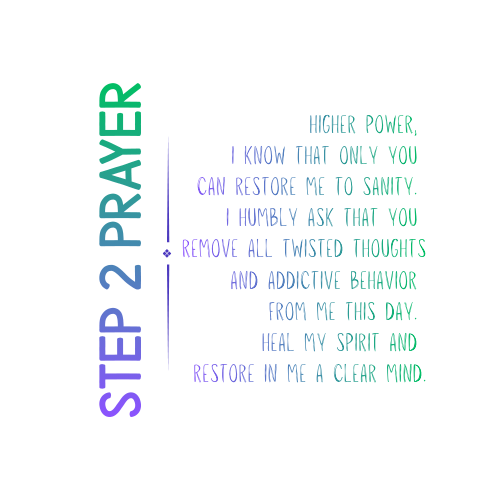
Step Two reads: “Came to believe that a Power greater than ourselves could restore us to sanity.“
Notice it doesn’t say did believe. It says came to believe. This is a process step, not at all a finish line. It’s about movement. A shift. A soft opening.
For many of us in food addiction recovery, this step feels uncomfortable because we’ve spent years believing the problem was that we weren’t’ strong enough, disciplined enough, or good enough. Step Two gently reframes that lie. It says maybe the problem isn’t you. Maybe the problem is that you’ve been trying to do this alone.
This step matters because it introduces relief.
Real relief.
If Step One takes away the illusion of control, Step Two offers something to lean on in its place. It invites sanity back into a mind that has been highjacked by food obsession, rules, shame, and mental gymnastics. Sanity here doesn’t mean perfection or never thinking about food again. It means clarity. It means pausing before reacting. It means not being ruled by cravings, compulsions, or that frantic inner voice that says “just one bite” even when we already know how that story ends.
During Step Two, it’s common to wrestle. You might wrestle with the word “God”. You might wrestle with past religious trauma. You might wrestle with cynicism, skepticism, or a deep fear of being disappointed again. All of that belongs here.
This step is not about blind faith. It’s about willingness.
Willingness to question the old belief that you are the only thing standing between yourself and disaster. Willingness to experiment with trust, even in the tiniest of ways.
One thing to watch for during this step is black-and-white thinking. Thoughts like “If I don’t believe 100% this won’t work” or “If I don’t define my Higher Power perfectly, I’m doing it wrong“.
Thoughts like this are just the food addiction mind sneaking back in, craving certainty and control.
Step Two is gray. It’s curious. It’s allowed to be messy.
Another thing to notice is where sanity already shows up. Moments where food doesn’t feel quite as loud. Those are signs this step is already working, even if you don’t feel particularly spiritual.
This is also the step where we can lean into practices that help us feel supported, rather than pressured, like:
- Quiet morning moments where you site with a cup of coffee and simply say “I don’t know what I believe yet, but I’m open.“
- Writing letters to a Higher Power you’re not even sure exists, just to see what comes out.
- Spending time in nature and noticing that the world continues to function without your micromanagement.
- Reading recovery literature slowly, not to “get it right”, but to simply feel less alone.
- Even borrowing belief from your sponsor or group counts.
Sometimes Step Two looks like saying “I don’t believe yet… but I believe that you believe“.
At Abstinent Kitchen, we talk a lot about restoring trust with ourselves, and Step Two is where that begins to extend outward.
Food addiction taught us that our minds could not be trusted around food. Step Two teaches us that help is available, and we don’t have to define it perfectly for it to work. We just have to stop slamming the door shut.
This step is quiet, but it’s powerful. It’s the step where hope stops being an abstract concept and starts becoming a lived experience. Not because everything suddenly feels better, but because we are no longer carrying the weight of recovery alone.
Food For Thought:
- What fears come up when I imagine trusting something beyond my own control? What compassion can I offer those fears?
- Am I resisting the idea of a Higher Power? Does the idea feel unsafe, disappointing, or out of my control? What would it look like to explore this step?
- If I am feeling resistance, where did any resistance or current beliefs about a Higher Power or “God” begin? How might those experiences be influencing my willingness to believe that a Power greater than myself could restore me to sanity around food?
- What words or ideas feel safer than “God” right now, and how can I allow my understanding of a Higher power to evolve naturally?
- If sanity were slowly being restored in my life, what small changes would I notice first?
- Where am I still insisting on doing recovery alone? What might it feel like to ask for or accept help instead?

© 2026 Intentional Recovery Foundation dba Abstinent Kitchen. All Rights Reserved. Abstinent Kitchen is not affiliated with and does not represent Overeaters Anonymous or any other recovery program or retreat. Intentional Recovery Foundation is a 501(c)3 organization; our profits support local recovery community programs. Content on this website and any affiliated pages or platforms is not intended as a substitute for professional medical advice, diagnosis, or treatment. Consult your healthcare provider for personalized medical guidance.
Designed with WordPress